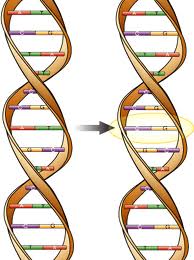
1. Analogous structure: is a trait or an organ that appears similar in two unrelated organisms.

2. Asteroid: are a class of small Solar System bodies in orbit around theSun.

3.comparative morphology : is the study of similarities and differences in the anatomy of organisms.

4. derived trait: is a trait that is present in an organism, but was absent in the last common ancestor of the group being considered.

5. Fossi:are the preserved remains or traces of animals (also known as zoolites), plants, and other organisms from the remote past.

6.Fossilization: rock formations and sedimentary layers (strata) is known as the fossil record.

7.Geologic time scale: provides a system of chronologic measurementrelating stratigraphy to time that is used by geologists, paleontologists and otherearth scientists to describe the timing and relationships between events that have occurred during the history of the Earth.

8. Gondwana: was the southernmost of twosupercontinents (the other being Laurasia) that formed part of the Pangaea supercontinent from approximately 510 to 200 million years ago (Mya).

9. Half-life: The period over which the concentration of a specified chemical or drug takesto fall to half its original concentration in the specified fluid or blood.

10.Homologous structure: traits of organisms are due to sharing a common ancestor, and such traits often have similar embryological origins and development.

11. Lineage: group composed of species, taxa, or individuals related by descent from a common ancestor.

12. morphological convergence: describes the acquisition of the same biological trait in unrelated lineages.

13.morphological divergence: is a species of skink in the family Scincidae.

14. Pangea: was the supercontinent that existed during the Paleozoic and Mesozoic eras about 250 million years ago, before the component continents were separated into their current configuration.
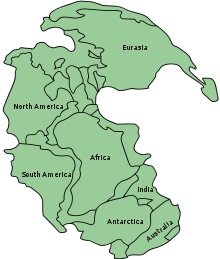
15.plate tectonics theory: is a scientific theory which describes the large scale motions of Earth's lithosphere.

16.stratification: the stratification of a genetic population based on allele frequencies

17.theory of uniformity: assumption is that the same natural laws and processes that operate in the universe now, have always operated in the universe in the past and apply everywhere in the universe.

18.adaptive radiation: is the evolution of ecological and phenotypic diversity within a rapidly multiplyinglineage.

19.Adaptive Zone: is a term describing the relational position of a species or population in its ecosystem to each other

20.allopatric speciation: isspeciation that occurs when biological populations of the same species become isolated due to geographical changes such as mountain building or social changes such as emigration.

21. Anagenesis: is the evolution of species involving an entire population rather than a branching event, as in cladogenesis.

22. Archipielago: is a chain or cluster of islands.

23.Biological specie concept: is one of the basic units of biological classification and a taxonomic rank.

24.Cladogenesis: is an evolutionary splitting event in a species in which each branch and its smaller branches forms a "clade", an evolutionary mechanism and a process of adaptive evolution that leads to the development of a greater variety of sister organisms.

25.Dosage Compensation: is a genetic regulatory mechanism which operates to equalize the phenotypic expression of characteristics determined by genes on the X chromosome so that they are equally expressed in the human XY male and the XX female.

26.Evolutionary tree: is a branching diagram or "tree" showing the inferred evolutionary relationships among various biological species or other entities based upon similarities and differences in their physical and/or genetic characteristics.

27. Extinction:is the end of an organism or of a group of organisms (taxon), normally a species.

28. Gene Flow: is the transfer of alleles of genes from one population to another.

29.Genetic Divergence: is the process in which two or more populations of an ancestral species accumulate independent genetic changes (mutations) through time, often after the populations have become reproductively isolated for some period of time.

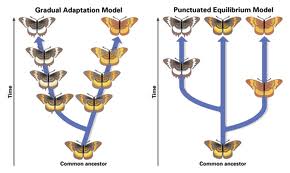
30. Gradual model of sperciation: slight morphological changes over long time spans.
31. Hybrid Zone: exists where the ranges of two interbreeding species meet. For a hybrid zone to be stable, the offspring produced by the cross (the hybrids) have to be less fitthan members of the parent species, although this condition does not need to be met in the very first hybrid generation.

32.Mass Extintion: is a sharp decrease in the diversity and abundance of macroscopic life.

33.Parapatric Speciation: are terms from biogeography, referring to organisms whose ranges do not significantly overlap but are immediately adjacent to each other; they only occur together in the narrow contact zone, if at all.

34.Punctuation model of speciation: is a theory in evolutionary biology which proposes that most sexually reproducing species will exhibit little evolutionary change for most of their geological history, remaining in an extended state called stasis.

35.Reproductive isolating mechanism: is a collection of mechanisms, behaviors and physiological processes that prevent the members of two different species that cross or mate from producing offspring, or which ensure that any offspring that may be produced is not fertile.

36.Speciation: is the evolutionary process by which new biological species arise.

37.Species: is one of the basic units of biological classification and a taxonomic rank.

38.Simpatric speciation: is the process through which new species evolve from a single ancestral species while inhabiting the same geographic region.